
Two Reports. Two Different Purposes. But Did Taxpayers Get the Answers They Expected?
There were two separate PwC engagements, each with a different purpose.

The release of the PwC reports on the Richmond Olympic Oval marks an important step toward improving governance and accountability. I welcome the work that has been done and believe many of the recommendations should be implemented.
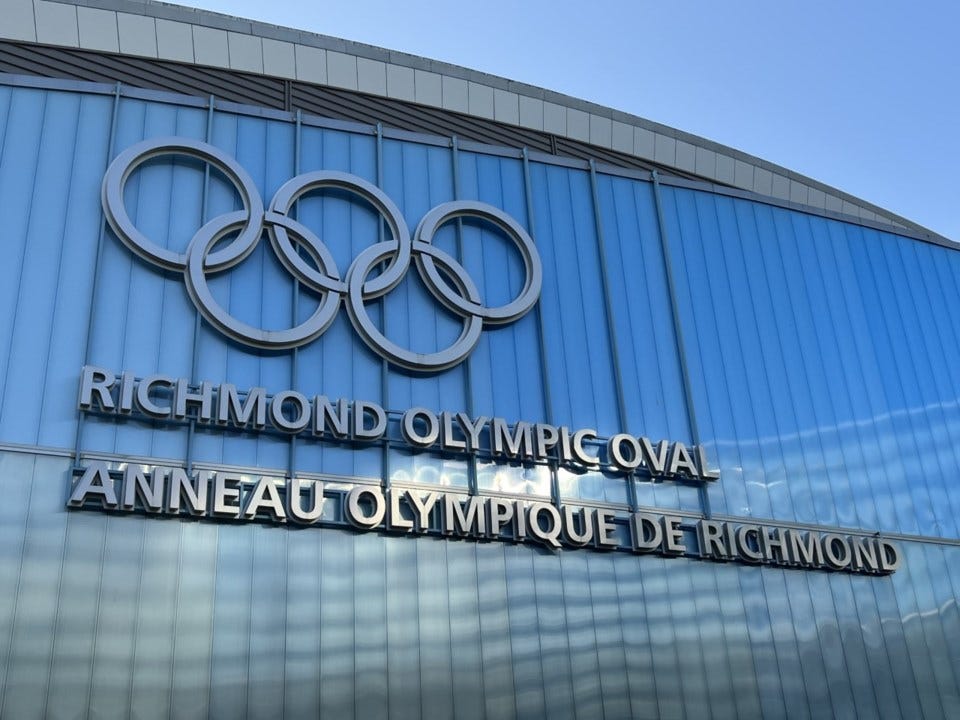
However, after carefully reviewing both reports, I believe there is an important distinction that every Richmond resident should understand.
There were two separate PwC engagements, each with a different purpose.
Understanding that distinction is essential to understanding what questions have—and have not—been answered.
Why Were These Reviews Initiated?
These reviews were not commissioned in a vacuum.
They followed significant public concern over allegations of:
questionable financial management,
excessive and costly travel,
weak Board oversight,
procurement practices,
potential financial irregularities,
possible fraud,
and what many residents perceived as wasteful spending of public money.
Those concerns damaged confidence in one of Richmond’s most important public assets and ultimately resulted in:
a complete replacement of the Oval Board of Directors,
a new City Council liaison,
and Council directing independent reviews.
The objective was simple: Restore public trust.

Report One: The Forensic Audit
The first report is the Forensic Audit.
Its mandate was to examine historical transactions by reviewing a risk-based sample of employee and Board expenses and procurement contracts over a multi-year period to determine compliance with policies and identify potential non-compliance, internal control issues, or financial impropriety.
This was not merely a governance discussion as it examined actual historical spending.
The report contains important findings, including:
a review of hundreds of expense transactions,
procurement compliance testing,
findings related to Board and employee expenses,
review of the European trips,
recommendations to strengthen policies and controls.
These findings deserve careful consideration.

Report Two: The Governance Performance Audit
The second report has a very different purpose. It is a Performance Audit of Entity-Level Controls.
Rather than reviewing historical spending decisions, it examines whether the Oval’s governance systems, internal controls, oversight, risk management, and organizational processes are appropriately designed.
Using the internationally recognized COSO framework, PwC evaluated areas such as:
governance,
enterprise risk management,
fraud prevention,
ethics,
Board oversight,
monitoring,
and internal control design.
The report provides an excellent roadmap for strengthening governance going forward.
I fully support implementing those recommendations.
Both Reports Add Value
It is important to acknowledge that neither report should be dismissed. The forensic audit examines historical compliance. The governance audit provides a blueprint for future improvement. Together they represent a significant investment by the City to strengthen accountability.
There is already encouraging evidence that governance improvements—including a new Board and strengthened oversight—are contributing to improved financial performance at the Oval with a new liaison, Councilor Michael Wolfe stepping in.
That is good news for taxpayers.
But One Important Question Remains
Although there were two reports, many residents may still ask:
Did they fully answer the concerns that prompted Council to commission them?
When the City announced these reviews, many taxpayers expected answers to questions such as:
What exactly happened?
Why did governance fail?
Were public funds spent appropriately?
Were policies intentionally bypassed?
Were oversight responsibilities fulfilled?
Were all concerns investigated?
What accountability resulted?
The reports answer many of these questions indirectly but they do not necessarily answer all of them directly! That distinction matters.
The Difference Between Accountability and Improvement
The governance audit is primarily about improving systems where the forensic audit primarily examines compliance within its defined scope. Neither report was designed to become a public narrative explaining every decision made over the past decade and as a result, many residents may still feel there are historical questions that remain unanswered.
That does not diminish the value of the reports, rather it simply recognizes that improving governance and satisfying public accountability are related—but different—objectives.
The Bigger Lesson
For me, the biggest lesson isn’t about what happened yesterday, it’s about what Richmond does tomorrow. The Oval has already demonstrated that stronger governance can produce better outcomes. Following governance changes, the organization improved its financial performance and reduced its operating contribution from the City. That is exactly what taxpayers should expect. The challenge now is ensuring that these lessons extend beyond the Oval.
Governance Before Crisis
Throughout my campaign, I have advocated for stronger governance across City Hall—not because I believe government is inherently broken, but because I believe prevention is always better than reaction. People don’t simply want more audits. They want confidence that audits won’t be needed in the future and that requires more than policies. It requires leadership. Leadership that asks difficult questions, welcomes transparency, and recognizes governance is not simply about compliance—it is about protecting public trust.
Looking Forward
The reports should not be the end of the conversation but rather the beginning.
That is why I proposed a Richmond Governance Task Force—to examine governance across City Hall, learn from best practices across Canada, strengthen oversight of Council-controlled organizations, and help ensure that future councils inherit stronger governance than the one they received.
The real measure of success will not be whether we completed two reports. It will be whether we build a culture where financial stewardship, accountability, and transparency become so deeply embedded that future forensic audits are needed only in the rarest of circumstances.
That is the Richmond I want to help build.
Richmond City Council Candidate
Steady Leadership. Stronger Richmond.